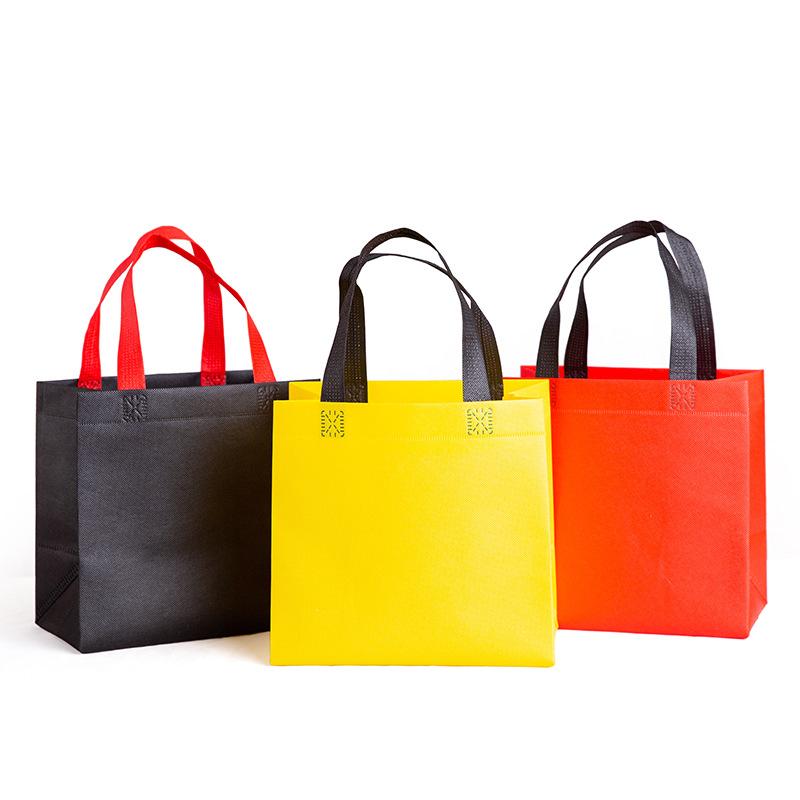
In the vast ecosystem of reusable packaging, the non woven bag has emerged as the undisputed workhorse. While it may lack the sheer structural force of its woven cousin, its unique combination of affordability, versatility, and speed of production has fueled a quiet revolution in the retail and promotional sectors. For large scale operations, from sprawling hypermarkets in Dubai to international trade shows at the World Trade Centre, the non woven bag presents a perfectly balanced solution. It is the key to achieving environmental compliance and marketing impact at a scale and price point that other materials cannot sustainably match.
The defining characteristic of a non woven bag lies in its manufacturing process. Instead of weaving threads, a web of polypropylene fibers is bonded together using heat and pressure. This technique, known as spunbonding, results in a soft, cloth like material that is surprisingly strong and breathable. The process is significantly faster and less resource intensive than weaving, which directly translates into a lower unit cost. This economic efficiency is the primary driver of its widespread adoption. It allows a national retailer, for instance, to replace millions of single use plastic bags with a reusable alternative without incurring prohibitive costs.
This affordability does not, however, imply a compromise on brandability. Non woven fabric provides an excellent surface for screen printing, a method that is both cost effective and ideal for bold, clear logos and messages. While it may not be the optimal choice for photorealistic imagery, it perfectly serves the need for clear, impactful branding that is instantly recognizable from a distance. For promotional events, product launches, and mass market retail, this is precisely what is required. Bag2Pack works with clients to optimize their artwork for this medium, ensuring brand consistency and visibility across massive production runs.
The versatility of non woven material is another significant factor in its success. The fabric can be easily cut and stitched into a vast array of shapes and sizes. Beyond the standard tote, it can be fashioned into drawstring bags, foldable shopping bags that fit in a pocket, insulated cooler bags, or sophisticated garment bags. This design flexibility allows businesses to create a custom solution that precisely fits their product and their brand aesthetic. A local Dubai coffee roaster could use a small non woven bag for retail beans, while a major electronics retailer could design a larger, reinforced version for boxed goods, all using the same core material.
From a logistics and implementation standpoint, non woven bags are an operator’s ally. They are lightweight and can be packed flat, significantly reducing shipping costs and storage space requirements compared to bulkier options. For a business with a complex supply chain and numerous points of sale across the Middle East, these efficiencies add up to substantial savings. The ability to procure and distribute large volumes of non woven bags quickly allows companies to respond rapidly to changing regulations or new marketing campaigns.
The non woven bag occupies a critical space in the market. It is the bridge that allows mass market businesses to cross from a disposable to a reusable model in a financially viable way. It meets the consumer’s expectation for a free or low cost reusable option while still offering a durable product that will be used multiple times, reducing plastic waste and enhancing brand presence. It is the pragmatic, scalable solution that makes large scale environmental progress possible. In the ongoing transition towards a more sustainable retail landscape, the non woven bag is not merely a participant; it is the engine of change.
Frequently Asked Questions
- What is the main difference between woven and non woven bags from Bag2Pack? The primary difference is in the manufacturing process. Woven bags are made by weaving polypropylene threads together, resulting in extreme strength. Non woven bags are made by bonding fibers together with heat, making them softer, faster to produce, and more cost effective for large orders. Bag2Pack can help you decide which is better for your specific needs.
- Are non woven bags a good choice for large scale promotional events in the UAE? Absolutely. Non woven bags are the preferred choice for large events, trade shows, and conferences. Their low cost allows for mass distribution, while their excellent surface for screen printing ensures your brand and event sponsors get clear visibility. They are lightweight and practical, making them a welcome giveaway for attendees.
- How environmentally friendly are non woven bags compared to single use plastic? Non woven bags are significantly more environmentally friendly. They are designed to be reused dozens, if not hundreds, of times. A single non woven bag can prevent the consumption of hundreds of plastic bags over its lifespan. They are also recyclable in many facilities, contributing to a more circular economy and supporting Dubai’s waste reduction goals.
- Can Bag2Pack produce non woven bags in custom shapes and sizes? Yes, one of the key benefits of non woven fabric is its versatility. Our production facilities can create bags in a wide variety of custom shapes, sizes, and configurations, including options with zippers, pockets, or reinforced handles. We can engineer a bag that is perfectly suited to your products and branding requirements.
- What is the typical lead time for a large order of custom non woven bags from Bag2Pack? Lead time depends on the order size, customization complexity, and current production schedules. However, because the manufacturing process for non woven bags is so efficient, we can often fulfill very large orders more quickly than with other types of bags. Please contact our team for a precise timeline based on your project specifications.
 BAG2PACK
Leave a comment